
Most salespeople treat the first call as an opportunity to present. It isn't. It's an opportunity to earn the right to present.
Your prospect doesn't know enough about their own situation yet to evaluate your solution. You don't know enough about them to pitch it credibly. So walking in with a polished deck full of features and pricing doesn't build confidence - it just signals that you're not really listening.
The first call should do four things:
- Understand their goals and challenges
- Teach them something new about their situation
- Show them how you help them
- Guide them towards the next step
Here’s how we think about it.
Understand
Before you show anything, you need to understand what they're going through so you can tailor everything else that comes after. I write “understand” and not “listen” here because this section is more active than you might think. It’s not just about listening to what they say, but probing and diving deeper.
1. Discovery
Understand your prospect:
- Role: What role do they play in the deal? Are they the decision maker?
- Goals: What do they want to accomplish?
- Challenges: What are they having problems with?
- Solutions: What have they tried? Did it work? Why not?
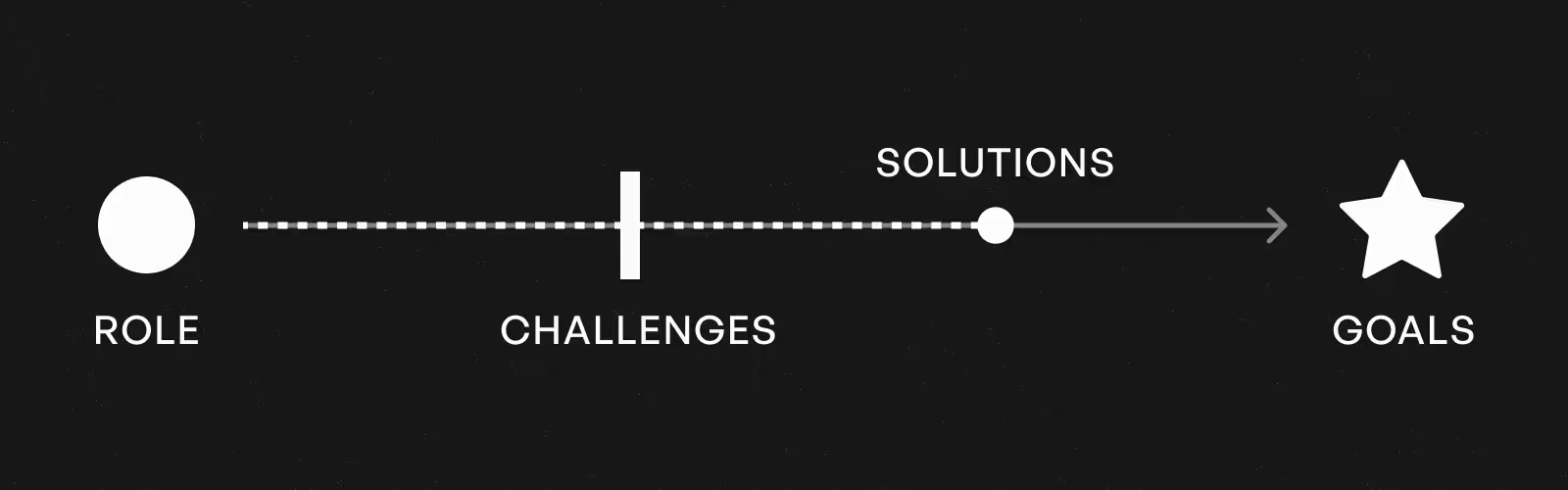
Honestly, discovery doesn’t require slides - and might even be better without them. Face-to-face conversation keeps you focused on listening rather than presenting, and it feels more natural for prospects to open up.
That said, there are times when slides can support the discovery process. If you feel that discovery is a bit undefined and needs more structure, then you can bring in a couple slides. For example:
- A list of common goals for prospects that are unsure of what they want
- A stage framework if you see that the challenges they face are widespread across the industry
- A solution breakdown if you see many prospects having issues with common solutions
Teach
Now that you understand their situation, it's time to connect what you learnt in discovery to something they haven't considered before.
The research is clear on this: according to The Challenger Sale, suppliers who teach customers something new about their business make up more than 50% of star performers in complex sales environments.
2. Insight
This is where you give them the "aha" moment. You're not just acknowledging their challenges -you're reframing how they think about them.
The goal is to make them think, "I never looked at it that way before." When you nail this, they stop seeing you as another vendor and start seeing you as someone who gets their business. This insight becomes the foundation for everything else in your presentation. Without it, you're just pitching and not teaching.
Find the "problem inside the problem"
Surface the root cause they haven't identified yet. Don't just acknowledge their stated challenge—dig deeper to reveal what's really driving it. If they say "our sales are down," the problem inside the problem might be "your sales process treats symptoms, not causes." Help them see the hidden dynamic they've been missing.
Challenge conventional wisdom
Show them why the obvious solution isn't the right one. Take the approach everyone else is recommending and explain why it falls short. When you challenge what they assumed was true, you position yourself as someone who sees what others miss.
Share a unique perspective
Give them a fresh lens for viewing their situation that only you can provide. This isn't just a different opinion—it's a reframe that changes how they think about their entire challenge. Your perspective should feel both surprising and inevitable once they hear it.
We challenged conventional wisdom and weaved past client customer case studies as a teaching point for Lytics
3. Implications
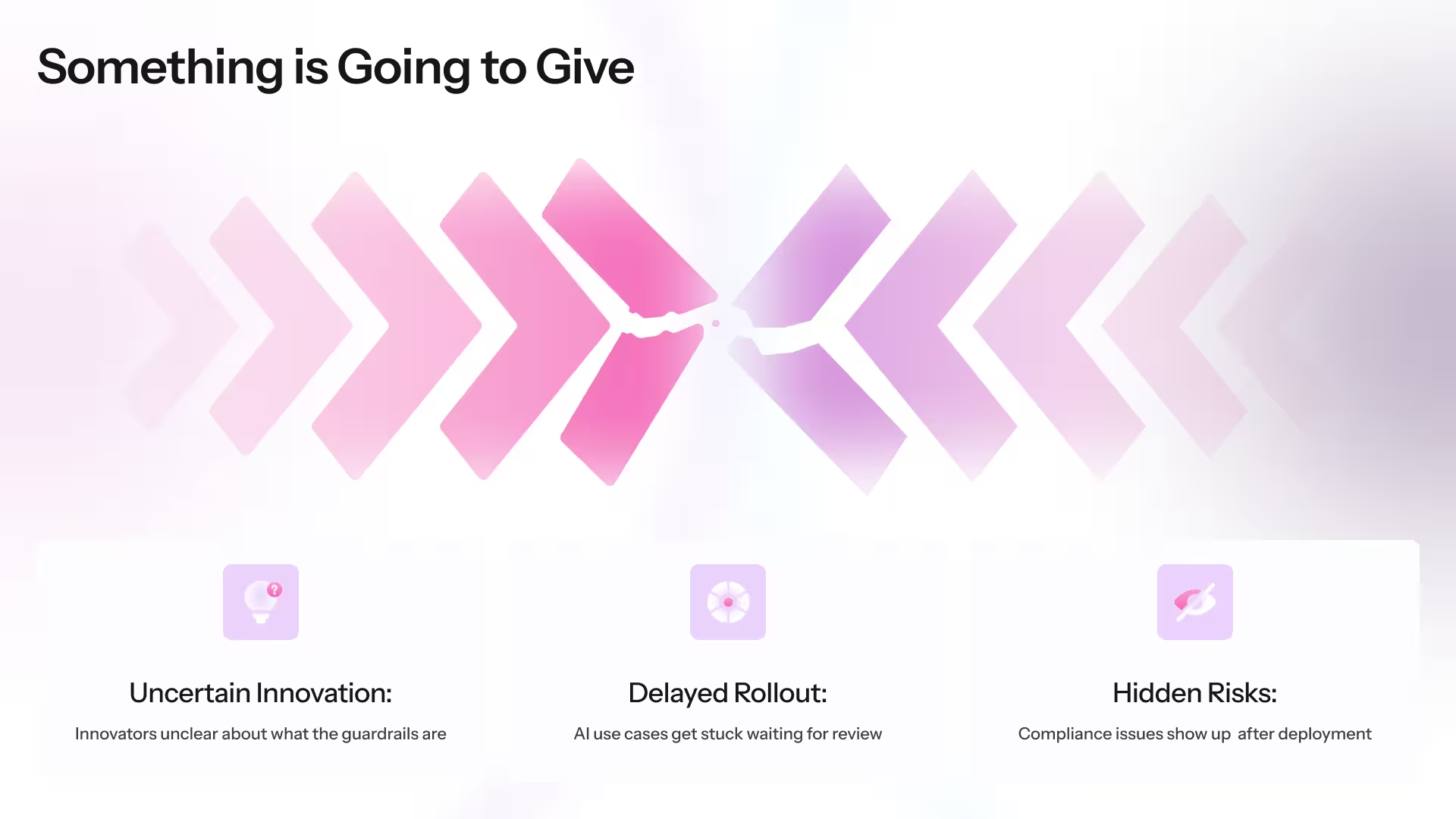
Insight alone isn't enough. You need to help them understand what it means—both the cost of ignoring it and the opportunity of acting on it.
Second-order effects
If this insight is true, what else becomes true? What other problems does it create or solve? Help them connect the dots between your insight and the ripple effects they haven't considered. If the real problem is misaligned incentives, what does that mean for their team dynamics, customer satisfaction, and long-term growth? Map out the cascade of consequences.
Pain amplification
Help them feel the visceral cost of ignoring this reality. Show them how the pain compounds: "This inefficiency isn't just slowing you down this quarter - it's creating a 6-month lag that gets worse every cycle." Make the status quo feel unsustainable.
Opportunity potential
Show them what becomes possible if they capitalise on this insight. Paint the picture of the upside they're missing out on and how it can transform their business.
Show
This is where you finally introduce your solution. You've taught them something new, shown them the implications, and now it's time to connect the dots to show them you can actually deliver on that vision.
4. Solution
Show them how your solution addresses the insight and implications that you’ve shared.
Build on a “perfect world”
Paint the vision of what their life would look like if they worked with you. How the problem they face would be resolved and how you’d unlock so many new opportunities for them.
Draw from your insight
Connect your solution directly to the insight that started this entire conversation. Because you understand the root problem. you built your solution to address it from the ground up.
Differentiate beyond feature
Don't limit yourself to just features or capabilities. Your differentiation might come from your team's background, your implementation approach, or even your pricing structure. Maybe you're the only ones who offer outcome-based pricing because you're confident in the insight-driven results. As long as it builds on your insight and connects to the perfect world scenario, it belongs here.

5. Product
You've earned the right to finally talk about your product - but not in a technical deep-dive. This is meant to show that you have the capabilities to support the big solution you proposed.
Cover each pillar of your solution
Break down the core components that make your approach work, but be strategic about what you show. You don't need to walk through every feature - focus on the pillars that directly address what they care about most.
Lead with benefits, support with features
Start with what it does for them, then explain how it does it. "This eliminates the bottleneck we talked about" is more powerful than "This feature processes 10,000 requests per second." Lead with the outcome, then provide the technical proof that makes it credible.
Show, don't tell
Focus on showing what your product/service exactly looks like and what outcomes you can deliver . Instead of just saying "We optimize your process," show them exactly how your product “speeds up processes by 70%”
6. Proof
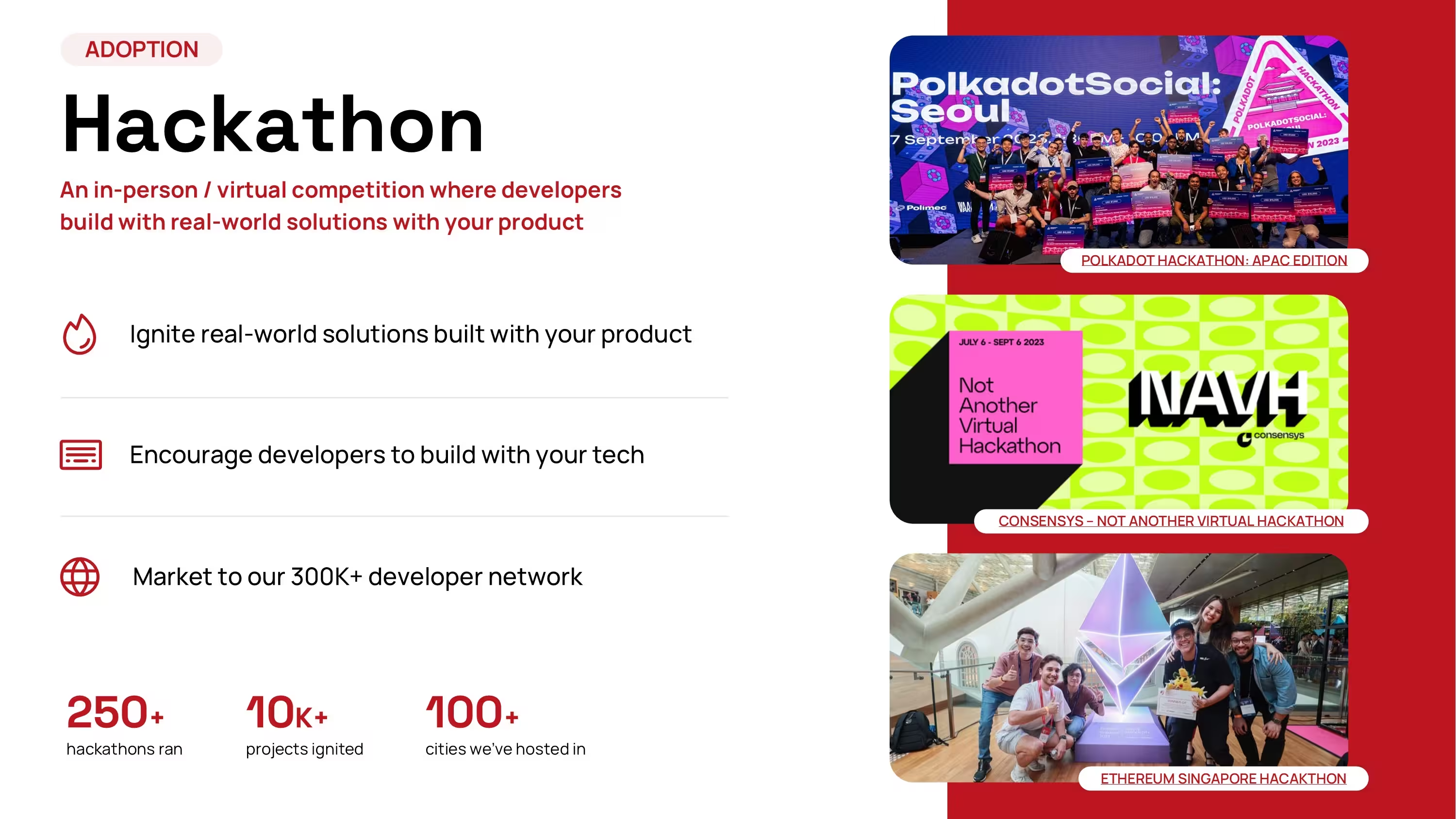
Finish up your showcase with real work you’ve done with other clients.
Show relevant case studies, not the biggest
They need to see themselves in the story. Don't default to your most impressive client or largest deal. Show them someone who faced the same insight-driven problem they're dealing with. A relevant case study from a similar company carries more weight than a flashy logo that doesn't match their context.
Run through a quick demo
Now you can show them the product in action. Keep it focused—demonstrate the specific capabilities that address their situation. Don't tour every feature; show the ones that matter for solving the problem you've been discussing. Make it feel like a preview of their own implementation.
Include specific, measurable results
Vague outcomes don't build confidence. "Improved efficiency" is forgettable. "Reduced processing time from 3 days to 4 hours" sticks.

Guide
Most presentations end with "Any questions?" or "What do you think?" That's not guiding - that's hoping. After everything you've shared, they need clear direction on what happens next.
7. Next Steps
Convert all that momentum into forward motion - guide them to their next best step. This doesn’t really need a dedicated slide too, but it’s a good idea if you want some structure.
Recommend the best next step
Don't ask them what they want to do. Tell them what should happen next based on everything you've discussed. "Based on your timeline and requirements, I'd recommend we..." You're the expert on your process—guide them through it.
Outline who needs to be involved
Help them understand what resources they'll need to move forward. Who from their team should be in the next meeting? What information will you need from them? What approvals might be required? Don't leave them to figure out the internal logistics on their own.
Understand their buying process
Find out how decisions actually get made at their company. Who else needs to see this presentation? What's their typical evaluation timeline? What could slow things down or speed them up? Understanding their process helps you navigate it effectively instead of just hoping for the best.
The Must-Have Slides for Your First Call
Here’s a quick guide of what we’ve covered:
Understand
1. Discovery - Map their challenges and desired outcomes through conversation, not slides
Teach
2. Insight - Share commercial insight that reframes how they see their situation
3. Implications - Help them feel the real cost and opportunity of this new perspective
Show
4. Unique Solution - Position your approach as the bridge to that perfect world
5. Product Overview - Show exactly how your solution delivers on the vision
6. Proof - Demonstrate it works with relevant case studies and result
Guide
7. Next Steps - Take ownership of what happens next with clear recommendations
More than building a better deck, this is about having a better dialogue. Understand what they want, connecting it with a unique insight, showing them how you can help, and then guiding them to the next step.